
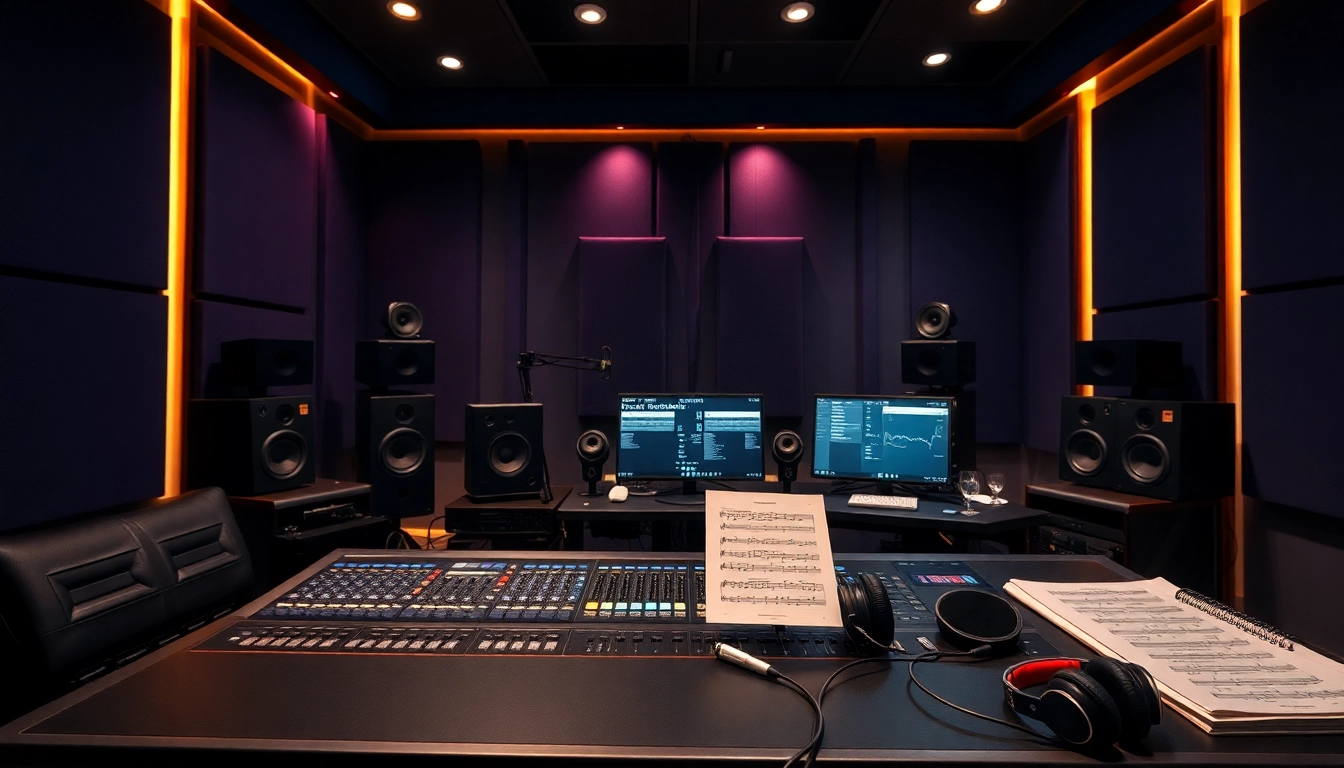
Understanding Online Audio Mastering
What is Online Audio Mastering?
Online audio mastering refers to the final step in music production, where the mixed tracks are prepared for distribution. This process enhances the overall sound quality and ensures consistency across various playback systems. By utilizing advancements in technology, musicians and producers can take advantage of online platforms for mastering, making the process more accessible than ever. Services can provide professional results without the need for physical studios, allowing artists from anywhere to access high-quality mastering services. For detailed guidance on this process, explore resources dedicated to online audio mastering.
The Importance of Audio Mastering
Audio mastering is crucial as it ensures that the final product is polished and ready for release. This stage levels out any discrepancies in volume, equalizes frequency response, and creates a coherent sound across tracks. Proper mastering can significantly enhance the emotional impact of music, allowing the artist’s vision to resonate with listeners. Additionally, a well-mastered track is essential for radio play and digital streaming platforms, where sonic quality can make or break an artist’s success. Mastering also provides a competitive edge, as a well-produced track fosters trust and interest from potential listeners.
Key Terms and Concepts
Understanding key terms in audio mastering is essential for effective communication within the industry. Some of the most commonly used terms include:
- Loudness: Refers to the perceived volume of a track and is adjusted to make the music stand out without causing distortion.
- Dynamics: The variation in loudness between the softest and loudest parts of the track.
- A process that adjusts the balance of specific frequency ranges to enhance or reduce certain elements of the sound.
- Compression: A technique that reduces the dynamic range of a track, helping to create a more uniform sound.
- Headroom: The amount of space between the maximum level a track can reach and zero; essential for preventing distortion.
Essential Tools for Online Audio Mastering
Software Options for Mastering
The right software plays a vital role in achieving a high-quality mastered track. There are several industry-standard digital audio workstations (DAWs) and specialized mastering software available. Popular options include:
- Pro Tools: Widely used in studios, it offers powerful editing and mixing capabilities.
- Logic Pro X: Notable for its user-friendly interface and robust set of built-in plugins.
- Ozone by iZotope: A dedicated mastering suite that provides all the necessary tools in one package.
- WaveLab: Known for its detailed editing tools and analysis functions, ideal for mastering.
Choosing the right software depends on personal preference, budget, and specific project needs.
Equipment Recommendations
While mastering can be performed online, having the right equipment enhances the process. Here are essential tools for mastering:
- Studio Monitors: High-quality monitors designed for accurate sound reproduction are crucial for mastering.
- Headphones: A reliable pair of studio headphones can help isolate and refine specific elements of the mix.
- Audio Interface: A good audio interface ensures high-quality playback and recording capabilities.
- Acoustic Treatment: Improving your studio environment with sound panels or bass traps ensures accurate monitoring.
Understanding Plugins and Effects
Plugins are software add-ons that can enhance the capabilities of your DAW. During the mastering process, certain types of plugins are indispensable:
- Equalizers: Used to adjust the frequency balance of the mix.
- Compressors: Manage dynamic range and enhance loudness.
- Limiters: Prevent overs from adding punch to the track while maintaining headroom.
- Reverb: Adds space and depth to tracks when used sparingly.
Understanding how to effectively use these plugins will dramatically enhance the quality of your audio mastering.
The Online Audio Mastering Process
Step-by-Step Mastering Workflow
The mastering process generally follows a defined workflow that can be applied regardless of whether you’re mastering online or in a studio. Here’s a step-by-step approach:
- Preparation: Ensure your mix is the best it can be. This stage involves checking levels, frequencies, and overall balance.
- Setup: Load your track into the DAW or mastering software and set the appropriate session settings.
- Processing: Start with EQ, followed by compression, limiting, and any other desired effects.
- Critical Listening: Regularly switch between different audio systems for better assessment.
- Finalization: Adjust final levels and prepare the master for export.
Common Mastering Techniques
Mastering is more than just making everything loud; it’s about enhancing the track to its fullest potential. Common techniques include:
- Frequency Balancing: Making sure that no particular frequency overwhelms the mix.
- Dynamic Control: Utilizing compression to smooth out the dynamics.
- Stereo Enhancement: Adjusting the stereo field to create a more immersive listening experience.
- Loudness Maximization: Ensuring the track is competitive in loudness without introducing distortion.
Transforming Raw Tracks into Polished Masters
The goal of mastering is to transform your raw tracks into a polished product. This involves numerous adjustments, including tonal shaping, dynamic control, and the final output format. Listening critically and making subtle adjustments can significantly impact the final sound. It’s essential to remain objective during this process, often taking breaks to return with fresh ears. Remember that less is often more when it comes to effects and adjustments.
Best Practices for Online Audio Mastering
Preparing Your Tracks for Mastering
Preparation is key to a successful mastering session. Here are some practices to ensure your tracks are ready:
- Remove Unwanted Noise: Make sure your sessions are clean; eliminate any unnecessary tracks or noise.
- Set Levels Properly: Ensure the track peaks below -6 dB to allow headroom for processing.
- Consolidate Tracks: Bounce your tracks to a stereo file to maintain session integrity.
- Provide Reference Tracks: Include professionally mastered tracks for comparison during mastering.
Quality Control and Final Checks
Before finalizing your master, conducting quality control is vital. Play your track on various systems, including headphones, car speakers, and home systems, to ensure it translates well. Check for issues such as excessive dynamic range or frequency imbalances. It’s often recommended to listen at various volumes, ensuring clarity without any harshness at both low and high levels. Also, consider getting feedback from trusted peers before making the final export.
Common Mistakes to Avoid
Even seasoned professionals can make mistakes during the mastering process. Here are common pitfalls to avoid:
- Over-Compression: This can lead to loss of dynamics and listener fatigue.
- Pushing Levels Too High: This can cause distortion and reduce sound quality.
- Neglecting the Listening Environment: Poor acoustics can lead to misjudged mixes.
- Skipping Critical Listening: Trusting your ears is essential; avoid automatic corrections without critical assessment.
Future Trends in Online Audio Mastering
Emerging Technologies in Mastering
The landscape of audio mastering is continuously evolving with emerging technologies. Automation in mastering software is becoming more prevalent, enabling quicker processing without sacrificing quality. Other innovations include advanced spectral analysis tools and cloud-based services, which can offer flexibility for remote collaboration on projects. The integration of these technologies aims to streamline the process and provide more options for customization.
The Role of AI in Audio Mastering
Artificial Intelligence is making waves in audio mastering, with tools that analyze the audio and suggest mastering settings. AI can detect issues in the mix and make real-time adjustments, allowing for efficiency and precision in the mastering process. While many fear that AI may replace human mastering engineers, the reality is that it can serve as an assistant, allowing professionals to focus on creative decisions rather than technical minutiae.
Market Trends and Consumer Preferences
As more artists turn to online audio mastering services, understanding market trends is essential. There is a growing demand for high-quality independent music releases, driving a rise in affordable online mastering services that cater to emerging artists. Consumers increasingly expect polished sound regardless of the artist’s budget, shaping the market to be more accessible. Staying updated on these trends is vital for mastering engineers to meet evolving demands.
Frequently Asked Questions
What is the difference between mixing and mastering?
Mixing involves balancing individual audio tracks, while mastering is the final process of preparing a mixed track for distribution, ensuring consistency and loudness across platforms.
How long does the online mastering process take?
The time for online mastering varies, but it typically ranges from a few hours to a few days, depending on the service and the complexity of the track.
Can I master my track myself?
Yes, many artists choose to master their tracks using software tools, but professional mastering often provides superior quality due to expert ears and equipment.
What formats should I provide for mastering?
Usually, a high-resolution WAV or AIFF file is preferred, with a minimum of 24-bit depth and 44.1 kHz sample rate to ensure the highest quality for the mastering process.
Is mastering necessary for streaming platforms?
While it is not strictly necessary, mastering is highly recommended to ensure your music sounds its best across different streaming platforms and devices.

